Pre-philately is pure postal history. Even the exchange of letters between sender and recipient was a complex undertaking. The vast majority of letters in the 18th and 19th centuries were sent without postage until 1850. It was often not possible to determine the postage in advance. The complicated postal relationships of the various rights holders made calculating the postage for letters across national borders a sometimes impossible undertaking. It was only later, from the 19th century onwards, that it was possible to send cash-franked letters (prepaid postage = FRANCO), depending on the destination. The condition, however, was that the interstate postal relations of the sender and the receiving office were regulated by a postal contract.
Unstamped letters from this period therefore include all the charges of the individual postal jurisdictions and when the letter was delivered, the recipient paid the final amount. This also ensured that the letter was delivered to the recipient. The collected tax was then redistributed or settled via the remuneration lists among the postal administrations involved in the mail route.
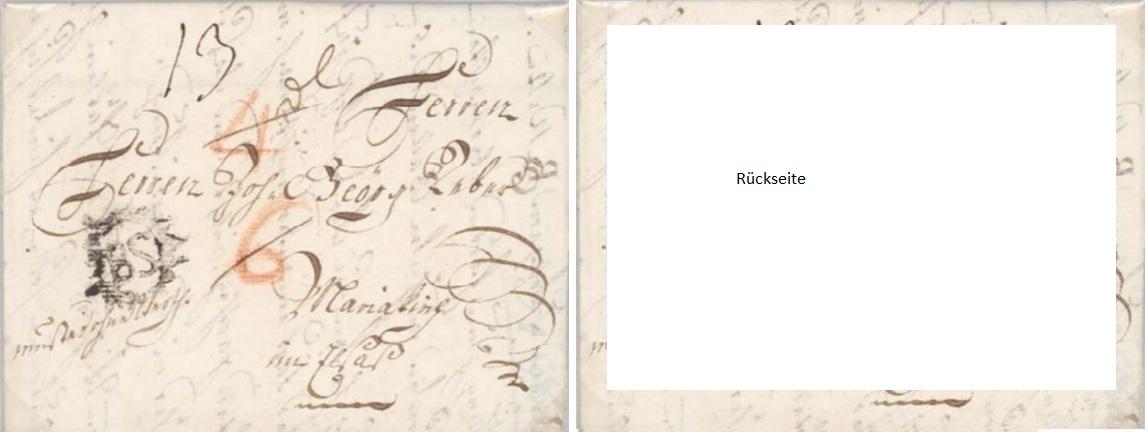
Zurich. 20 August 1785, via Basel to Mariaking in Alsace. Postage from Zurich to Basel 4 Kreuzer, Basel receives 6 Kreuzer from France and France demanded 13 Sols from the recipient.
Letters from this period that were sent over long distances and crossed several countries and thus usually also different postal sovereignties, demand a lot of knowledge and sweaty clarifications even from a specialist in postal history. On the one hand, he has to know the tariff structures and the postal conditions, on the other hand, he has to be familiar with the currency confusion of the almost 300 different currencies in Switzerland alone. He must also be able to interpret the postmarks and the special services associated with them. For example, a postmark can show that a letter (see illustration below) did not travel via the normal stagecoach routes, but was transported via a separate relay.
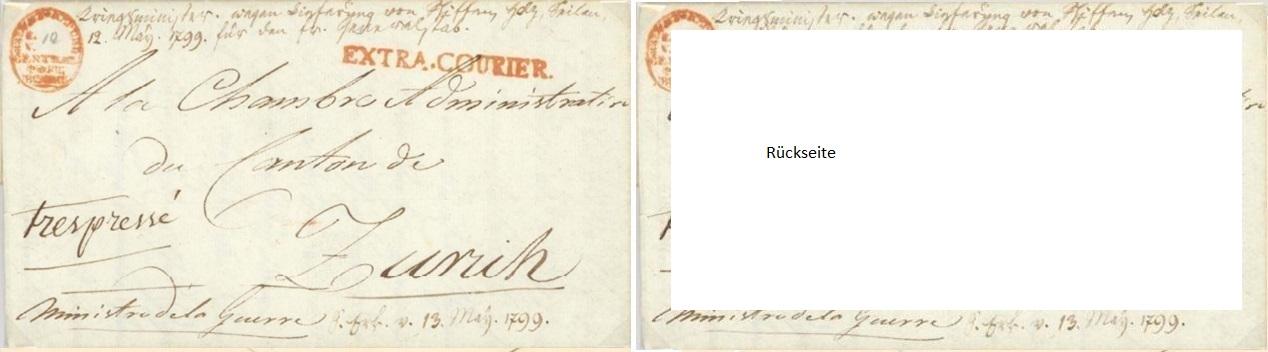
Lucerne 12 March 1799, from the Minister of War in Lucerne to the Administrative Chamber of the Canton of Zurich. Red stamp " EXTRA COUIRIER" and handwritten note "trés pressé".
If the letters were also sent abroad, where different foreign currencies were involved, a clarification can take several weeks per letter and often several specialists, who have joined forces in the Swiss Association for Postal History, are required with their special knowledge of sub-areas. The postmarks also have to be determined according to their origin and of course all the notes often have to be analysed. They usually give the clue as to which route the letter took. To foreign destinations, partial frankings are often encountered since it became possible to send letters paid in cash (prepaid). The letter was then paid for in cash up to the point agreed in the postal contract, such as the Franco border, port of disembarkation or port of embarkation. The remaining distance had to be paid by the recipient.
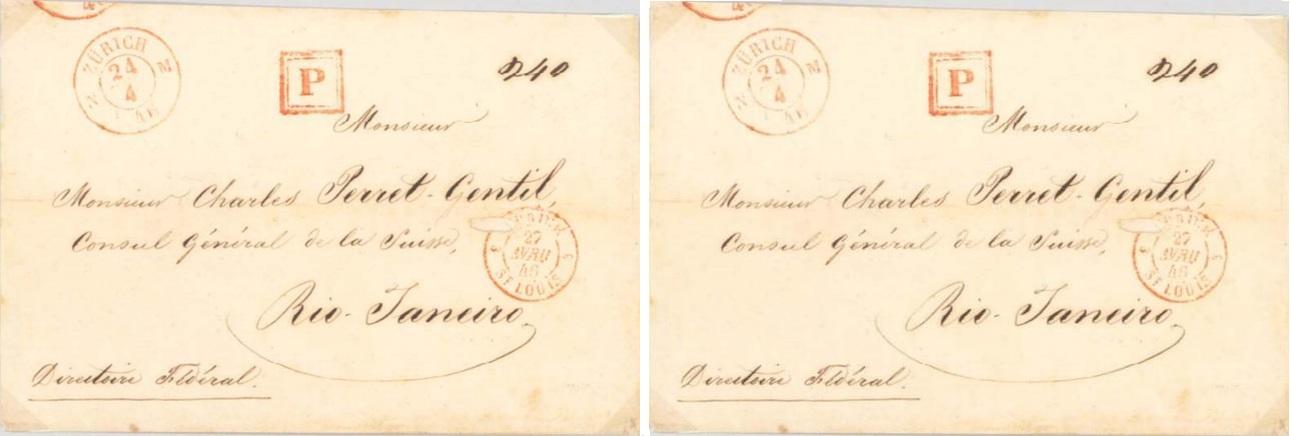
Zurich 24 April 1846, to Rio de Janeiro for wrapper in third weight with postage paid to port of disembarkation in Rio (on reverse are 192 centimes and round stamp "Bureau Maritim, Havre" The consignee paid for port charges and inland delivery and was charged 240 reis. Red partial franking stamp: "P" in double square.
Even seemingly unstamped letters, whether from the pre-philatelic period or later, have their charm, especially for home collectors they are important collection items.

Cash-franked (note on reverse) domestic pre-philatelic cover of 1847 from Colombier/Neuchâtel to Neuville/Bern. Front side: lower left FRANCO for paid. Next to the dispatch stamp the circular P.P for postage paid. On the reverse: the noted prepaid tax of 4 Kreuzern for the letter dispatch.
It is easy to recognise, the inland letters often have no great conspicuousness. If you are looking for such letters, look for the P.P. and the FRANCO, as a postmark or handwritten.
But they can also be more conspicuous. The letters to foreign countries below are a bit more conspicuous, all postmarks in red, the same procedure applies. Look for P.P. and Franco.
If there are also batch and other stamps on them, so much the better.

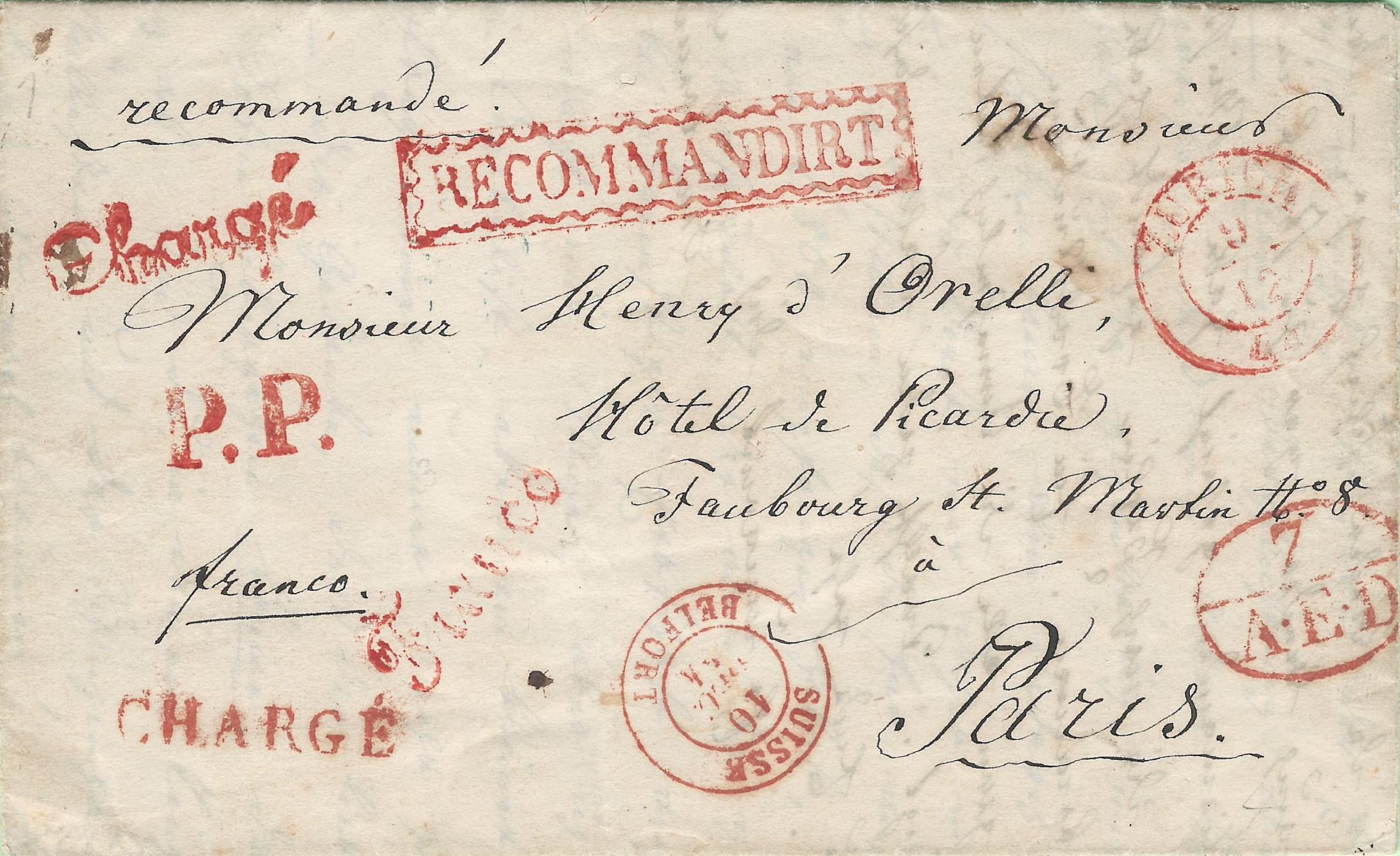
Zurich 9 December 1844 as a prepaid (red FRANCO) and registered letter to Paris. On the reverse side of the letter the tax of 120 centimes is noted. On the front the French charges of 7 decimes are noted with the 7 AED, which France was to receive from Basel. The letter cost 8 kreuzer to Basel in Switzerland, the 7 decimene corresponded to 14 kreuzer, together this was 22 kreuzer. The registered mail fee resulted in a doubling of the rate, thus 44 kreuzer or the equivalent of 120 centimes
It was not until the cantons of Zurich and Geneva issued their first cantonal stamps in 1843 and later Basel in 1845 that the end of pre-philately was heralded. But letters outside the local postage or even abroad were still sent at this time without postage or with cash postage (paid in cash by the sender at the counter). Even in the early days of the Bundespost, from 1850 onwards, when pre-philately ended completely, many letters were still sent unstamped.
This was due to the small values on the stamps and the high postage to foreign countries, which could not have been covered with an excess of stamps.
For all further details on franking marks, please refer to Postal History: "Charging marks".
Note:
Letters from the stamp era that were posted without postage are often treated as pre-philatelic letters, but this is fundamentally wrong. These are then unfranked or cash-franked letters. See Postal History: "Postage, Franco, Partially Franked". The specialist will be pleased, because pre-philatelic letters are often not expensive. But the later an unstamped letter is posted, the rarer they become. And as it is, rarities, once they have been recognised, are often no longer available at a good price.